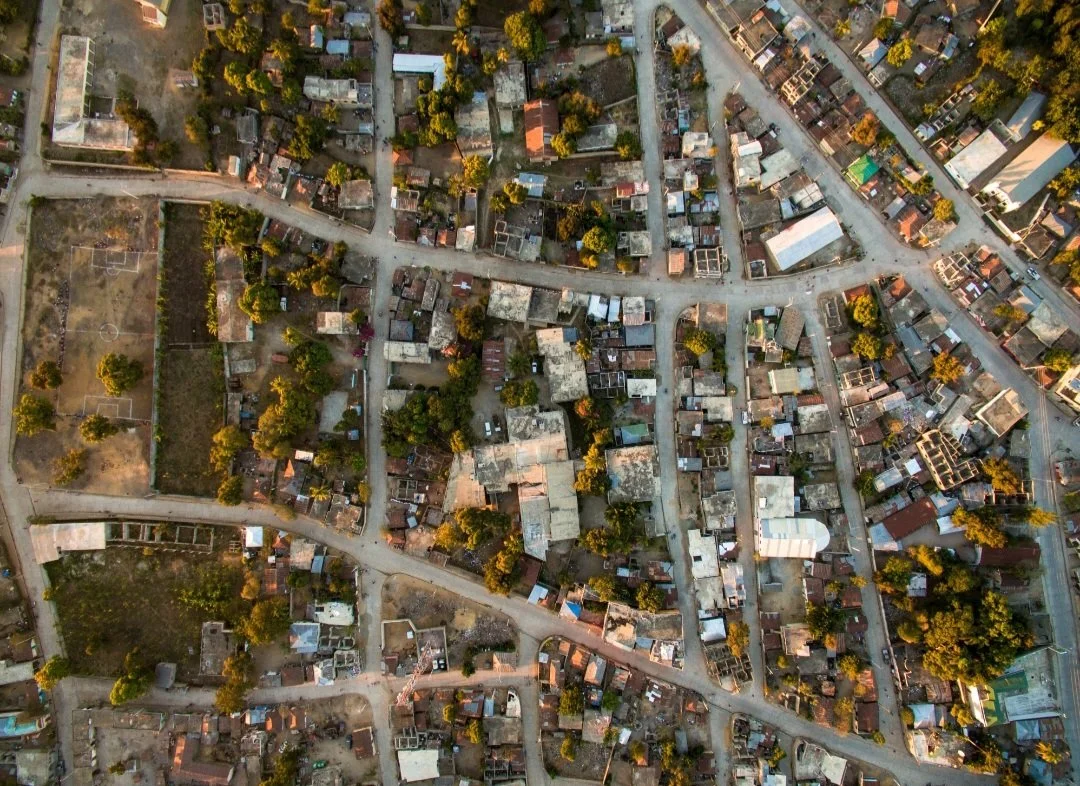
Photo by Matteo Favre
In the past decade, Port-au-Prince has become one of the world's most challenging operational environments. Criminal coalitions continue to maintain territorial control using asymmetric tactics and significant firepower.
The erosion of governance has caused Haiti's capital to descend into a perpetual state of violence, with armed factions consistently targeting critical infrastructure, arteries and public health facilities.
At the beginning of the year, more than 85% of the capital, Port-au-Prince, was reportedly under the control of armed groups or gangs, causing more than half of the country's population (roughly 6 million people) to meet the criteria for humanitarian aid. The gang war has pushed over 1 million people into displacement (IDPs).
5,519 people were killed in Haiti, and 2,608 were injured (between March 1, 2025 and January 15, 2026), according to the UN Human Rights report published on March 24, which emphasised the continued crisis where gangs continue to hold the population hostage in a perpetual state of killing, kidnapping, human trafficking, stealing, extortion, or sexual violence.
In 2025, the Haitian government hired a private military company to conduct security operations. The state and the capital have also seen a rise in violence perpetrated by self-defence groups or other groups engaged in what is locally called popular justice.
According to ACLED, anti-gang efforts recorded in 2026, including operations by national police, private companies, or international forces, have led to a reduction in violence in some areas of the capital. Between January 2026 and September 2026, ACLED reported a 75% reduction in the number of attacks against civilians.
The gangs have also targeted international forces directly, with the most recent incident happening on October 18 in Santo, when gangs attacked CSF officers. Four CSF officers are still missing.
El Salvador has recently sent over 2000 troops to Haiti without an official command and control structure or rules of engagement.
The size of the deployment has raised questions about whether the mission is to search for and rescue the missing technicians or part of a broader, long-term operation.
María Fernanda Artocha, analyst and Central America Research Manager at ACLED, notes that gang capacity remains a threat and that the current levels of violence have the potential to disrupt the upcoming elections.
From an operational and public health perspective, the prolonged crisis exhibits all the signatures of an urban asymmetric war theatre with grid insurgency. The healthcare infrastructure remains close to non-functional and overwhelmed by complex penetrating trauma mostly caused by imported high-calibre rifles and submachine guns.
Over 60% of Port-au-Prince health facilities, including the State University Hospital of Haiti (HUEH), have been forced to close or scale back activity due to targeted attacks, looting and staff kidnappings. Gangs have long controlled port access points for fuel and distribution, leading to a critical shortage of medical equipment and supplies.
The infrastructure deterioration has led to secondary epidemics caused by sewage overflow and lack of collection services for refuse, triggering cholera and waterborne outbreaks in numerous neighbourhoods and villages. Currently, PAHO/ WHO is supporting existing facilities by providing training on case management and infection prevention. The EU alone has provided over 568 million EUR in humanitarian aid since 1994.
In Port-au-Prince, clinicians continue to operate under austere and non-permissive conditions with limited supplies, which will most likely increase the high levels of excess mortality throughout the metropolitan area.
AUTHOR
George Tataru
Terrorism, Conflict and Public Security Research Analyst