Medical Intelligence is introduced to students during the WADEM Disaster Medicine Summer School by representatives of the Italian Network
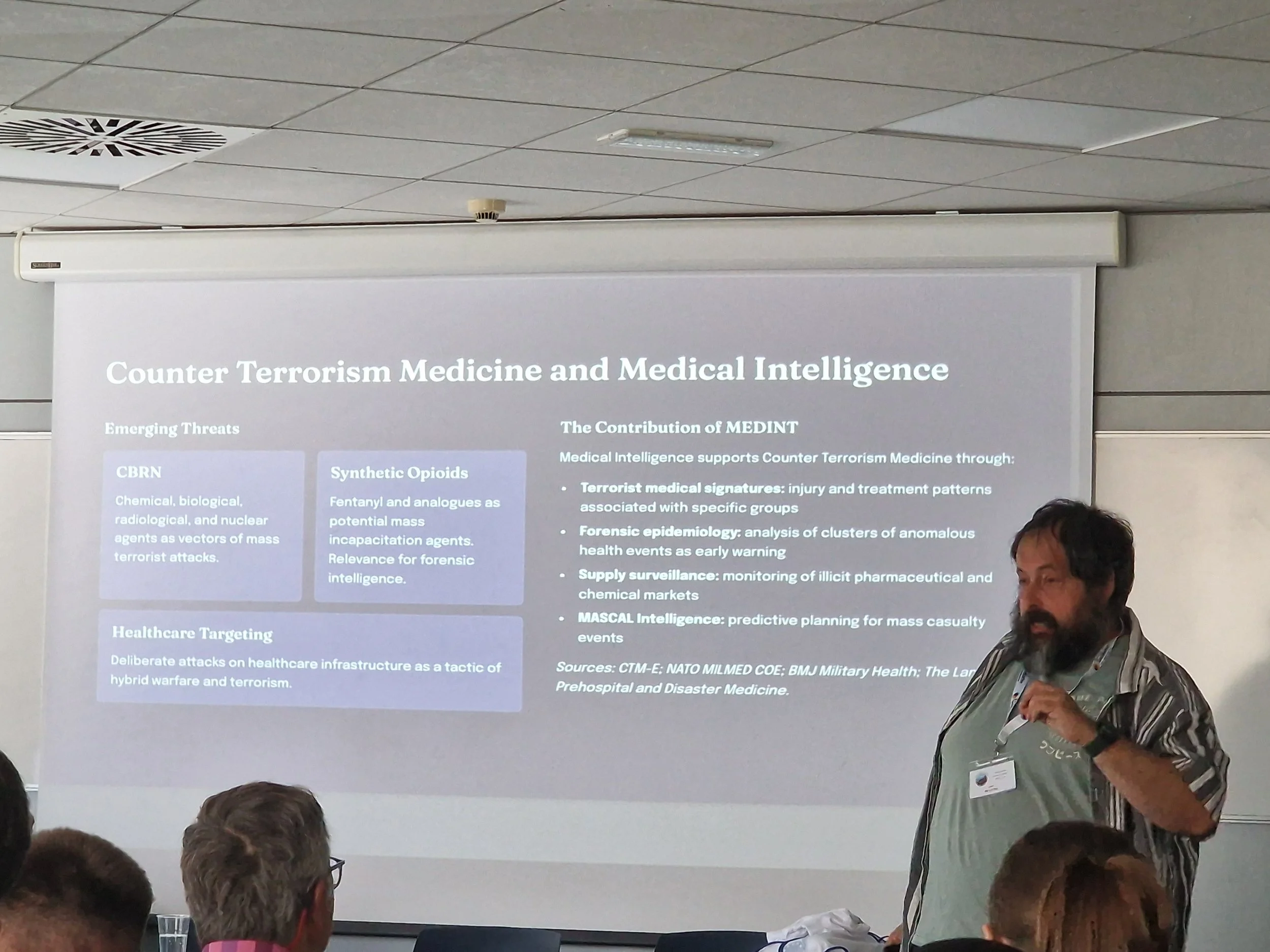
Photo by WADEM Disaster Medicine Summer School©
The field of counter-terrorism medicine just marked a significant milestone in global medical education. At this year's World Association for Disaster and Emergency Medicine (WADEM) Disaster Medicine Summer School, hosted in the historic Republic of San Marino, the next generation of global health security leaders gathered to tackle the future of crisis response.
Marco Filippi introduced medical intelligence (MEDINT) not just as a supplementary tool, but as a critical, stand-alone discipline.
Addressing an eager audience of medical students and professionals representing 25 countries, Filippi challenged traditional frameworks of disaster medicine.
What is Medical Intelligence?
For many in the room, the concept was an eye-opener. While traditional disaster medicine focuses on reacting to an event—triage, immediate care, and resource allocation—medical intelligence focuses on anticipation and prevention.
Medical Intelligence (MEDINT): The collection, evaluation, and analysis of health, biological, and environmental data to anticipate threats, guide strategic decisions, and protect populations before a crisis erupts.
In the context of counter-terrorism and modern asymmetric threats, waiting for an attack or an outbreak to happen is no longer enough. Filippi demonstrated how MEDINT bridges the gap between raw intelligence and clinical response, giving healthcare systems the ultimate advantage: time.
A global audience
The diversity of the attendees underscored the universal relevance of Filippi’s message. With students from 25 distinct nations listening, the lecture emphasised that biological threats, chemical risks, and coordinated terrorist attacks do not recognise borders.
By training international students in the fundamentals of medical intelligence, the WADEM Disaster Medicine Summer School is effectively building a global network of professionals who speak the same analytical language. These students will return to their home countries equipped to look at public health data not just through a clinical lens, but through a security lens.
The takeaway
Filippi’s keynote made one thing abundantly clear: as threats evolve, our medical curricula must evolve too. Elevating medical intelligence to a stand-alone discipline is a vital step forward for counter-terrorism medicine.
Marco Filippi is a Crisis and Emergency Manager and Subject Matter Expert in Defence, Safety and Security Fields with more than 20 years of experience in various international and national working environments, performing a variety of staff training and commanding assignments. He is also a strong promoter of Medical Intelligence and part of the leadership of the CTM-E Italian Network.