Disaster Health Institute team addresses Prolonged Casualty Care in Large-Scale Combat Operations at CongrEMs Romania
©CTM-E
Medical infrastructure is increasingly becoming a direct target in modern conflicts, and the traditional windows for medical evacuation are expanding from minutes to days. Addressing this critical shift, the Disaster Health Institute team recently delivered a vital lecture on Prolonged Casualty Care (PCC) in Large-Scale Combat Operations (LSCO).
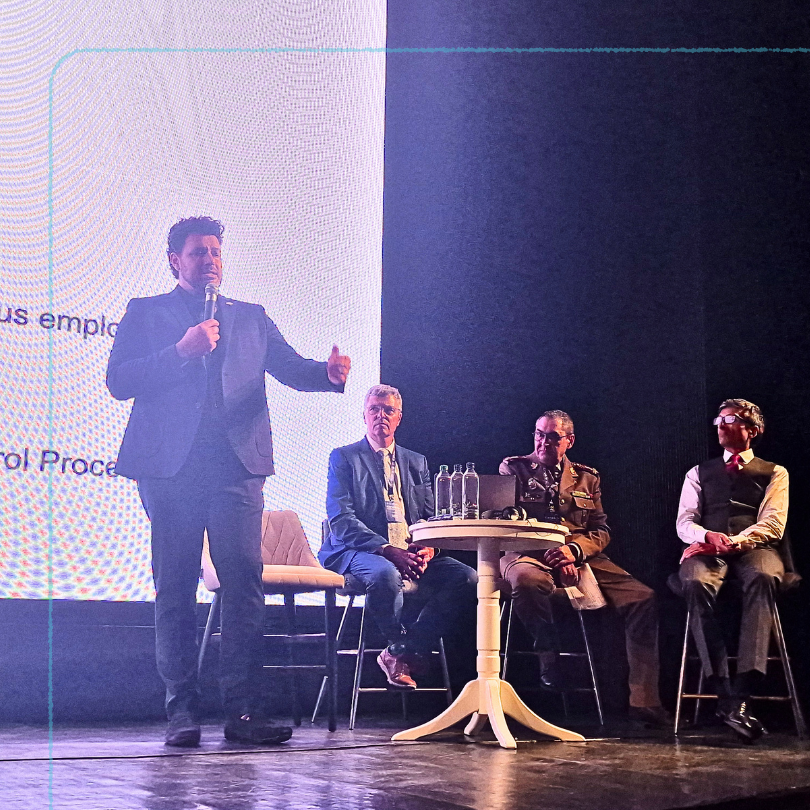
The presentation took place at the prestigious 3rd National Congress of Emergency and Disaster Medicine with International Participation (CongrEMs 2026), held from June 3–6 in Târgu Mureș, Romania.
The session was introduced by the esteemed Colonel Radu Tatar (MD) of the Romanian Army, who framed the urgency of the topic against the backdrop of shifting geopolitical realities and contemporary European security challenges.
Following the introduction, an expert panel from the Disaster Health Institute took the stage, featuring Sohrab Dalal (MD), Sevan Geran (Mag), and Frank van Trimpont (MD). Together, they dissected how shifting frontlines and contested air superiority are forcing a complete rewrite of conventional military medical doctrines.
The core of the lecture focused on the reality that the "Golden Hour" of trauma care is often unachievable in large-scale combat. When immediate evacuation is impossible, medical personnel must be equipped to sustain life over extended periods in austere environments.
Key paradigms and operational protocols discussed during the session included Role Zero, damage control procedures, and surgical procedures for non-surgeons.
A cornerstone of the presentation was the integration of real-world data and pioneering frameworks. The team highlighted John Quinn (MD) 's work, whose operational insights into austere medicine have shaped modern PCC protocols.
Crucially, the lecturers drew upon vital lessons learned from the ongoing conflict in Ukraine. The war has served as a stark reminder that modern peer-to-peer conflicts do not guarantee air supremacy or rapid medevac. The panel detailed how Ukrainian medical networks have adapted to persistent artillery threats, grid blackouts, and prolonged holding times, providing the global disaster medicine community with definitive, hard-earned data on sustaining casualty care under continuous siege.
For the Counter-Terrorism Medicine Europe (CTME) community, the insights from CongrEMs 2026 underscore that the boundaries between battlefield medicine, disaster medicine, and counter-terrorism response are blurring. As asymmetric and hybrid threats evolve, the competencies of Prolonged Casualty Care have the potential to become baseline requirements for civilian and military responders alike.